
Deciding to do a semester abroad in the United States is the easy part. The harder question is which American college or university actually fits what you are looking for. With thousands of institutions spread across a continent-sized country, the options are wildly varied. The terminology alone can also be confusing if you did not grow up in the US system: community college, state university, liberal arts college, research university each means something specific, and each offers a genuinely different experience.
This guide breaks down the key factors to consider and then matches each profile to the universities Beyond Abroad works with. Because the right university for a semester abroad is rarely the most famous one. It is the one that fits how you want to live for four or five months.
First: understand the types of US institutions
American higher education is genuinely unlike any other system in the world, and that variety is one of its great strengths. Before comparing specific universities, it helps to understand what kind of institution you are actually looking at.
Large public research universities
Big campuses, large lecture halls, huge course catalogs, strong athletics: this is what most people picture when they think of US college life. These institutions typically offer the widest range of academic programs and have significant on-campus infrastructure. San Diego State University and the University of Wisconsin-Madison both fall into this category.
Small to mid-size private colleges
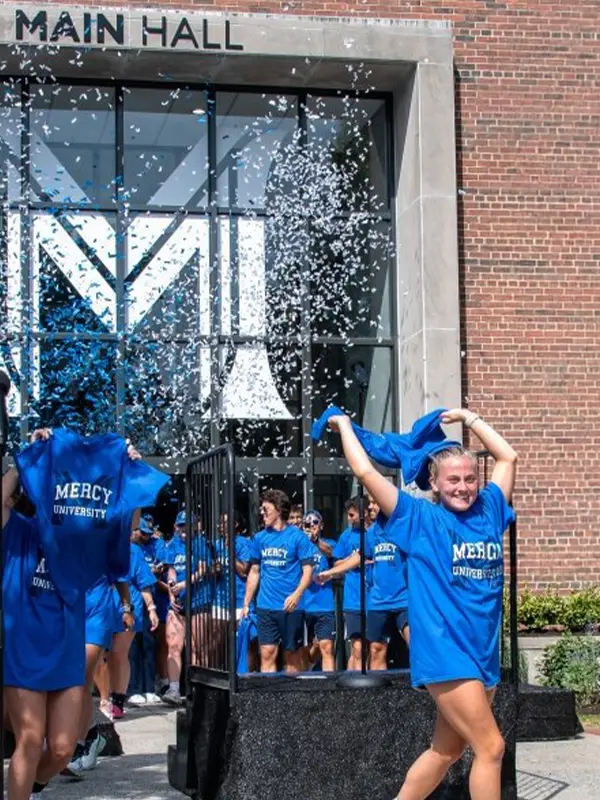
Smaller class sizes, more direct access to professors, and a stronger sense of community on campus. These colleges are often more career-focused in their approach to education. Berkeley College and Mercy University are good examples. Both offer more personalized attention than a large state university, which can be a real advantage when you are studying in a new country for the first time.
Community colleges
Two-year institutions that offer associate degrees and a wide range of courses at significantly lower tuition than four-year universities. For semester abroad students, community colleges are an excellent and often underrated option: genuinely international, highly accessible, and sometimes located in incredible settings. Green River College, Hillsborough College, Santa Barbara City College, and Santa Monica College are all community colleges in Beyond Abroad’s portfolio.
Universities in exceptional locations
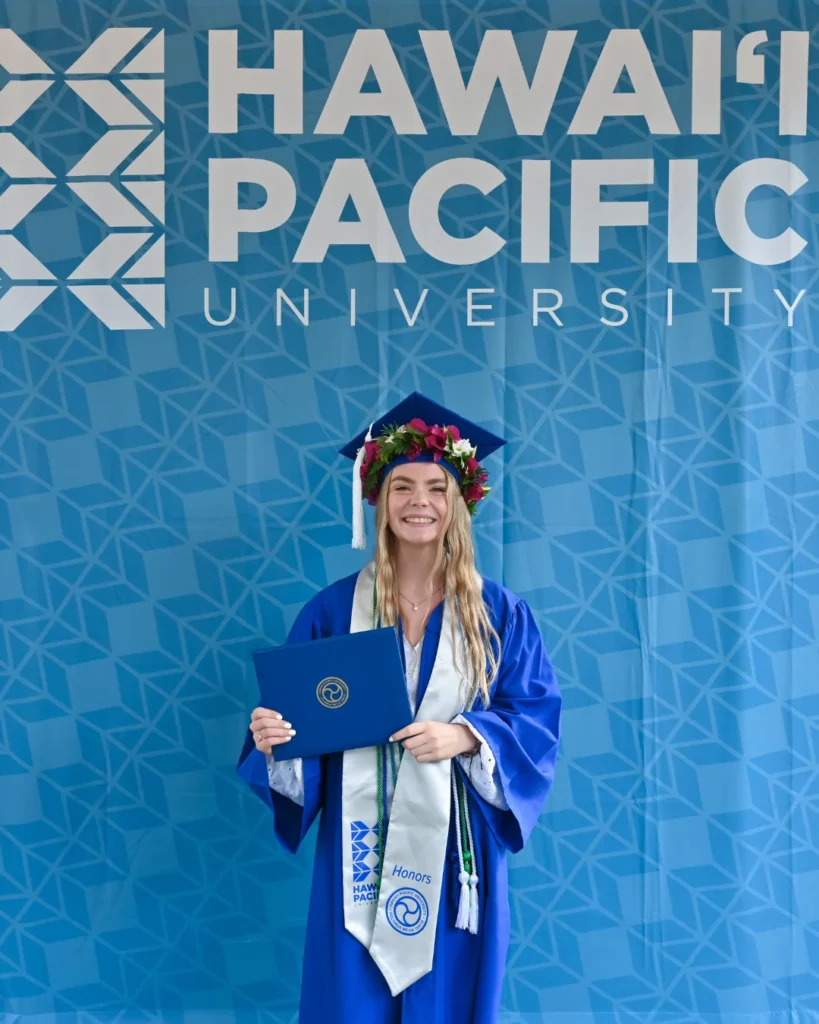
This is less a category and more a factor worth naming on its own. Some universities happen to be situated somewhere extraordinary, and that location becomes a significant part of the experience. Hawaii Pacific University is one of the clearest examples anywhere in the world.

Five questions that should drive your decision
1. What kind of city do you want to live in?
Location matters more than most students expect when they start researching. A semester abroad is not just about the classes you take: it is about the city you wake up in every morning, the neighborhoods you explore on weekends, and the people you meet outside of campus. Getting this right makes a much bigger difference to your overall experience than picking the university with the higher ranking.
Beyond Abroad’s US universities span genuinely different environments. Think the electric energy of Manhattan, the sun and surf culture of San Diego and Santa Monica, the quiet Pacific Northwest nature around Seattle, the Midwest campus experience in Chicago, New England coastal life in Rhode Island, and the extraordinary island setting of Hawaii. None of these is the right choice for everyone, and all of them are the right choice for someone.
2. How important is campus life to you?
Students who want the classic American college experience (football games, campus traditions, Greek life, dining halls) will find that a large public research university like San Diego State or Wisconsin-Madison delivers that far more fully than a smaller urban college. For students who instead want to be genuinely immersed in a city, universities like Mercy University or Berkeley College in New York are the stronger choice. Both place you directly in the middle of one of the world’s great cities. In that case, the city itself becomes the extended campus.
3. What are you studying and what do you want to take from it?
Course availability varies significantly between institutions. Checking that your chosen courses are offered and recognized by your home university before you apply is essential. This is especially true if you need to transfer credits. Large research universities like SDSU and Wisconsin-Madison offer the broadest range of academic programs. Smaller colleges often go deeper in specific areas: Berkeley College is particularly strong in business, design, and justice studies, while Mercy University stands out for health sciences and business across its New York campuses.
4. What is your budget?
Tuition fees among Beyond Abroad’s US partners vary considerably, and the cost of living in the surrounding city can vary just as much. Community colleges like Santa Barbara City College or Santa Monica College offer some of the most affordable tuition in the portfolio. Moreover, both happen to sit in two of the most beautiful locations in California. New York City, by contrast, will require a meaningfully larger monthly budget than Tampa or Seattle, regardless of which university you attend.
5. How much support do you need?
Studying in a new country, in a new academic system, with no existing social network is genuinely challenging, even for confident and independent students. The size and structure of the institution affects how supported you feel from day one. Smaller colleges tend to offer more direct, personalized support. Larger universities have dedicated international student offices but can feel less personal at first. A university known for its welcoming approach to international students is therefore worth factoring seriously into the decision. This is particularly true if this is your first time studying abroad.
Beyond Abroad's US universities: who should go where
Here is the full picture of what is available, with an honest description of what each university is best suited to.
Berkeley College
Mercy University
San Diego State University
Santa Monica College
Santa Barbara City College
Hawaii Pacific University
North Park University
Roger Williams University
University of Wisconsin-Madison
Hillsborough College
Green River College

How to narrow it down
Start with location. Students excited about New York should shortlist Berkeley College and Mercy University, then compare them on course offerings and budget. For those drawn to California, three excellent options each offer a different version of the state: the research university scale of San Diego State, the beachside community college experience of Santa Monica College, and the coastal-town charm of Santa Barbara City College.
From there, layer in your priorities. Campus size and athletics point clearly toward Wisconsin-Madison and San Diego State. A close-knit environment with career-focused support, on the other hand, points toward Berkeley College, Mercy University, or North Park University. Budget constraints are best addressed at community colleges like Santa Monica, Santa Barbara, Hillsborough, and Green River, all of which offer exceptional value without compromising on the experience.
Finally, check the course catalog against what your home university will recognize for credit transfer. This step is often left until late, and it should be one of the first things you do. Beyond Abroad can help you navigate credit recognition, and getting in touch early makes the whole process significantly easier.
💡Not sure where to start? Beyond Abroad’s team can help you match your priorities to the right university and walk you through the application process from the first step. There is no obligation, just a genuine conversation about what you are looking for.