
The United Kingdom is the second most popular destination in the world for international students. More than 600,000 international students enrolled in UK universities in 2024, and that number keeps growing. The reasons are not hard to find. UK degrees are globally recognized. The country has some of the world’s most prestigious universities, and students can complete a bachelor’s degree in three years rather than four. That combination of quality and efficiency is hard to match anywhere else.
This guide covers everything you need to know before studying in the UK. That includes which universities are worth knowing about, what it actually costs, how the visa works, and what student life looks like in different cities.
Why study abroad in the UK?
Studying in the UK gives you access to a higher education system that has shaped modern academia. Institutions like Oxford, Cambridge, and Imperial are household names globally, but the UK has strong universities at every level and in every region. Furthermore, UK degrees carry genuine weight with employers worldwide, partly because the country has been producing internationally recognized graduates for centuries.
Beyond the academic reputation, the UK is one of the most culturally diverse countries in the world. Major cities are home to communities from every corner of the globe. Studying here is genuinely internationalized in a way that daily life makes clear. London alone has over 300 languages spoken in its streets.
Short degree timelines
One practical advantage that often surprises students is how quickly you can complete a degree in the UK. A bachelor’s degree takes three years instead of four. A master’s degree typically takes one year. For students funding their own studies, that saves a full year of tuition fees and living costs, which adds up considerably.
Work rights during and after your studies
International students on a UK student visa can work up to 20 hours per week during term time. During holidays, they can work full-time. After graduating, the Graduate Route visa allows students to stay and work in the UK for two years. PhD graduates get three years. That post-study work window makes the UK one of the most attractive destinations for students who want to build their career after graduating.


The UK student visa: what you need to know
Most international students need a UK Student visa to study in the UK for longer than six months. Here is how the process works and what it costs.
How to apply
The process starts with your university, not with the government. Once you accept an unconditional offer, your university issues a Confirmation of Acceptance for Studies (CAS). That CAS number is what triggers your visa application. You apply online through the UK Visas and Immigration (UKVI) portal. You also need to attend a visa application centre to provide biometrics.
What you need to demonstrate
You also need to show the Home Office that you have enough funds to cover your first year of tuition and living expenses. For courses in London, the required proof of funds is £1,483 per month for up to nine months of living costs. Outside London, it is £1,136 per month. These are minimum thresholds, and most students budget considerably more.
Important: your visa application can only begin after you receive your CAS from your university. Do not book flights or arrange accommodation before your visa is approved.
What does studying in the UK actually cost?
The UK is not a cheap study abroad destination. However, the costs vary significantly depending on where you study and how you manage them. London is considerably more expensive than the rest of the country. Students who choose universities in Manchester, Portsmouth, or other regional cities will find their money goes much further.
Tuition fees
International student tuition fees at UK universities vary widely by institution and program. As a general guide, undergraduate programs cost between £10,000 and £38,000 per year. Postgraduate programs typically run from £11,000 to £40,000. Medicine and MBA programs sit at the higher end of the range. This is one area where the three-year degree length saves students a meaningful amount compared to a four-year equivalent abroad.
Living costs: London vs outside London
| Expense | London (monthly) | Outside London (monthly) |
|---|---|---|
|
Accommodation |
£1,200 – £1,400 |
£500 – £900 |
|
Food and groceries |
£150 – £200 |
£116 – £155 |
|
Transport |
£100 – £200 |
£50 – £100 |
|
Utilities and internet |
£80 – £140 |
£60 – £100 |
|
Social and entertainment |
£150 – £300 |
£100 – £200 |
|
Monthly total (estimate) |
£1,680 – £2,240 |
£826 – £1,455 |
Budgeting tips that actually work
Student discounts in the UK are genuinely useful. An NUS card or TOTUM card gives you reductions on transport, food, clothing, and entertainment. A 16-25 Railcard cuts a third off train fares across the country and pays for itself within a trip or two.
Beyond that, cooking at home rather than eating out makes a significant difference over a full semester. University accommodation tends to include bills, which simplifies budgeting. Furthermore, cities like Manchester, Portsmouth, Sheffield, and Glasgow consistently rank among the most affordable for students in the UK. They are worth considering over London if cost is a priority.
Where to study in the UK: cities and campuses
The UK is compact enough that most cities are well connected by rail. Each has a distinct character, and choosing the right city is as important as choosing the right university. Here is an honest look at what different parts of the country offer.
London
London is the most globally connected city in Europe. It is home to the world’s largest concentration of higher education institutions and a massive international job market. Cultural life in London never runs out of things to offer. Also, for certain industries such as finance, media, fashion, and technology, having studied and worked in London carries real weight on a resume. The trade-off is cost. London is consistently one of the most expensive student cities in the world, and the gap between London and the rest of the UK is significant.
Manchester
Manchester is the most popular alternative to London among international students, and it is easy to see why. It is a genuinely vibrant city with a strong music and arts scene and a well-established student community. Living costs are substantially lower than the capital. The city has two major universities and a growing tech and creative industries sector. That makes it a strong base for students interested in building a career in the UK after graduating.
Portsmouth
Portsmouth is a coastal city in southern England that offers a very different kind of UK student experience. It is compact, affordable, and well connected to London by train. For students who want quality education without the pace and cost of a major city, Portsmouth strikes a balance that many international students find appealing. The waterfront setting also makes it one of the more scenic places to study in the country.
Beyond Abroad universities in the UK
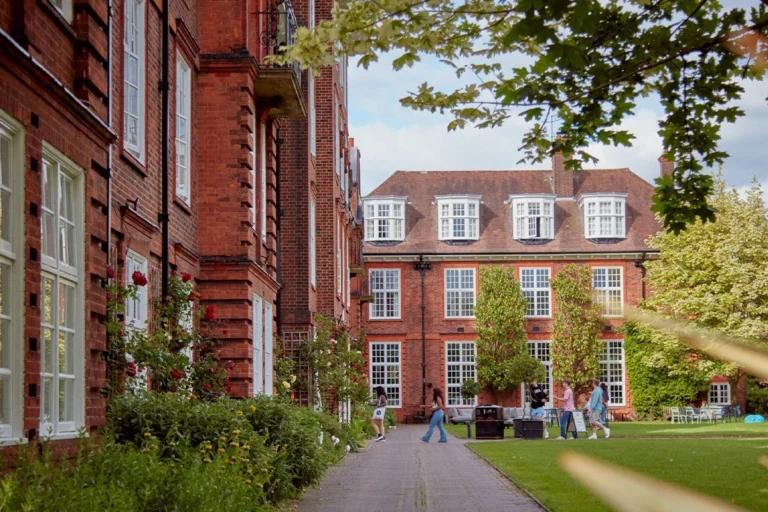
Beyond Abroad works with four UK universities, each offering a distinct academic environment and location. Together, they cover London, Greater London, and Manchester, as well as semester and full-degree options.
Regent's University London
London South Bank University
Manchester Metropolitan University
University of Portsmouth

Semester abroad vs full degree: which one is right for you?
Both options are worth considering seriously. The right choice depends on where you are in your studies and what you want from the experience.
A semester abroad in the UK
Studying abroad in the UK for a semester gives you an immersive experience without the full commitment of a degree. You take courses at your host university, earn transferable credits, and live in the UK for four to six months. It is a strong choice for students who want international experience on their transcript and in their life, but are mid-way through a degree at home. All four Beyond Abroad UK partners offer semester programs with up to 30 ECTS per term.
A full degree in the UK
If you are considering a full degree, the UK offers exceptional value when you factor in the three-year bachelor’s. You complete the same qualification in less time and typically pay for one fewer year of tuition and living costs compared to a four-year program elsewhere. UK degrees also travel well: they are recognized by employers and institutions across Europe, North America, Asia, and beyond. Additionally, the Graduate Route visa gives you time to build your career in the UK before deciding where to go next.
What student life is actually like in the UK
UK universities have a strong tradition of student life outside the lecture hall. Most have student unions that run hundreds of societies covering every interest imaginable, from academic clubs to sports teams to niche hobby groups. Getting involved in a society is one of the most effective ways to meet people quickly. That is particularly true in the first few weeks when everyone is still finding their feet.
Socially, the UK has a few things that are worth knowing before you arrive. The culture is friendly but often indirect. Building close friendships can take a little longer compared to some other study abroad destinations. University accommodation in your first year makes that considerably easier, since you are already sharing a kitchen and common areas with your neighbors. Beyond the campus, British cities are full of things to do. Live music, markets, comedy clubs, museums, and day trips to the countryside are all accessible and usually student-discounted.
Practical tips for arriving in the UK
Open a UK bank account as soon as you arrive. Many students use Monzo or Revolut before their permanent account is set up, which avoids international transaction fees. Get an Oyster card in London or an equivalent transport card in your city. Register with a local GP surgery within your first two weeks. This is how you access NHS care, and it takes time to process.
Also, bring layers. The weather in the UK is famously unpredictable, and students who arrive expecting summer often find themselves caught in October rain without a coat. Pack for all seasons regardless of when you arrive.